
Merkava Massacre: What Does It Take For Hezbollah to Destroy an IOF Tank?
“We can’t defeat them. Hezbollah are ghosts. We don’t see them, we just die. Please help us, we are fighting ghosts. These are [Sayyed] Hassan Nasrallah’s soldiers who never die.”

Hezbollah is committing new “Merkava Massacres” in southern Lebanon, yet this is not the main story to be told today.
Yesterday, Hezbollah successfully destroyed or disabled 21 Merkava tanks in southern Lebanon and northern occupied Palestine, carrying out a record of 87 operations in a single day:
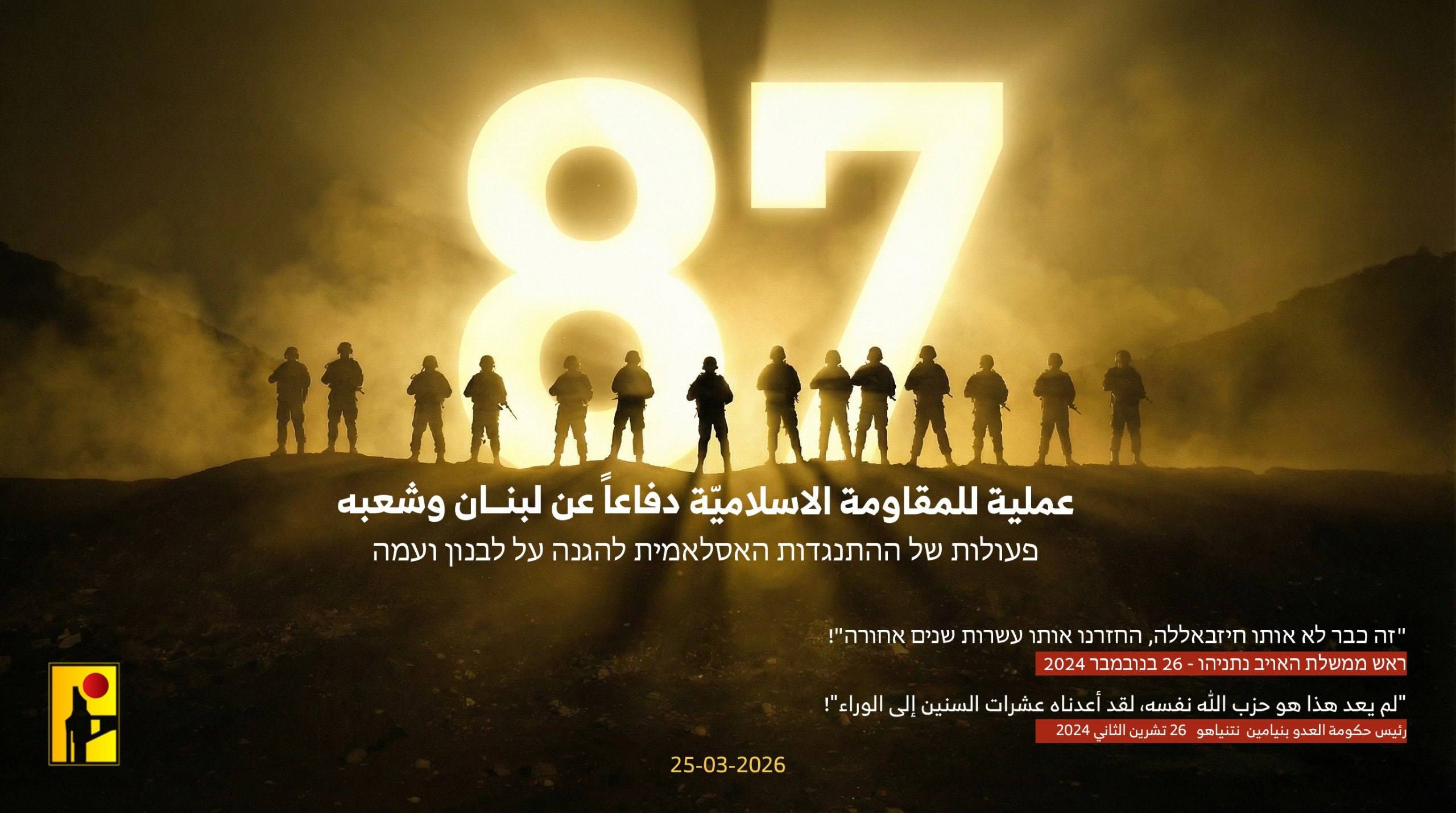
As of this afternoon, they have achieved direct hits on at least 20, making a total of at least 75 Merkavas taken out since March 2, when Hezbollah resumed its resistance operations against the zionist war of aggression on Lebanon.
The “Merkava Massacre” was the name given to a similar operation during the 2006 war, when Hezbollah fighters, reportedly only three men, destroyed at least 25 Merkavas and killed 34 IOF troops in the Battle of Wadi al-Hujeir, before the zionist invaders were forced to retreat in humiliation in full withdrawal from Lebanon.
But what does it take to destroy a Merkava tank?
The guided missiles the resistance deploys cost tens of thousands of dollars — a mere fraction of the cost of the tanks they destroy, which take up to $6 million and 2 years to produce.
This precise moment, when a resistance missile pierces the composite steel armor of a Merkava tank, crystallizes their decades of patient dedication, relentless preparations, and sacrifices in the path of liberation confronting the zionist entity’s decades of occupation and genocide backed by the most powerful empire in the history of the world.
In a split second, this moment illuminates the asymmetrical contours of the battlefield between the Axis of Resistance and the might of the US-zionist military industrial complex, which can deploy all its riches and technologies, but whose colonial psyches cannot comprehend how to fight a people who refuse to be defeated.
Behind every resistance missile there is a vast industrial infrastructure produced to fight imperialist hegemony, laborers in defense labs and factories thousands of kilometers away contributing to the liberation struggle with each material they manufacture, transported along the world’s most heavily surveilled and repressed smuggling route, much of which was forced to rebuild after the 2024 war and the imperialist overthrow of Syria’s sovereign government.
There are the eternal shadows of the assassinated leadership, whose successors were faced with the most difficult obstacles of the entirety of the resistance’s existence: to revive and reorganize its forces after immense losses, while much of the world declared them forever dead and defeated.
But they are guided by the luminous path of the tens of thousands of martyrs, and the cries of their mothers who still nurture them into the battlefield.
And above all, behind each missile, each bullet, each resistance fighter, there is the popular cradle of resistance, the masses who continue building new generations of fighters, even when their community’s losses are at a much greater scale than the enemy’s.
And who has articulated this dynamic more clearly than the enemy itself? As zionist soldiers invaded southern Lebanon in 2006, they called their commanders, crying to be evacuated:
“We can’t defeat them,” they panicked, disclosing a much deeper and inevitable truth. “Hezbollah are ghosts. We don’t see them, we just die. Please help us, we are fighting ghosts. These are [Sayyed] Hassan Nasrallah’s soldiers who never die.”
This is the longer version of a script I wrote for Vocal Politics, which you can watch in video form on Twitter, Instagram, or Telegram.
Sounds like the Israeli are playing the victim again- please help us we don’t want to die. Meanwhile they slaughter and torture innocent children and believe it is their right. Hope every single one is exterminated like the rats they are
really glad the Israelis don't have the martyrdom conviction when getting killed or dying